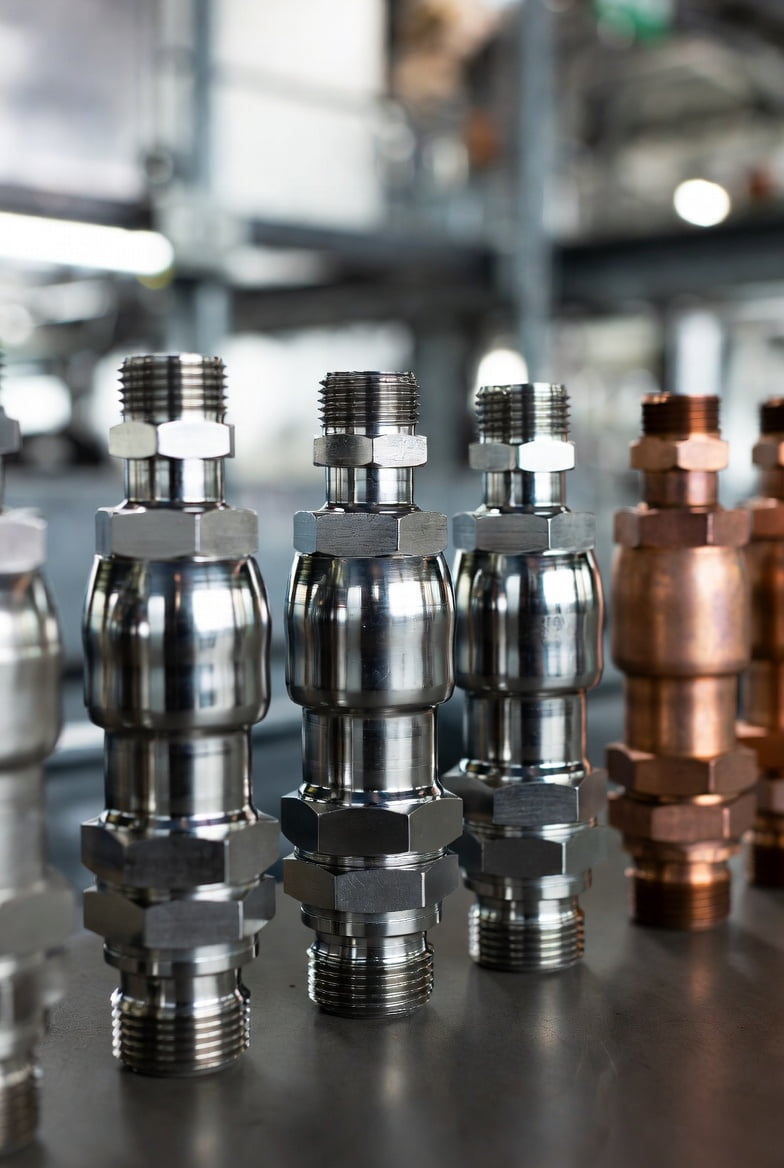
The Trend of Stainless Steel Press Fittings Replacing Copper Press Fittings: Analysis and Outlook
In the plumbing, HVAC, and industrial piping sectors, press-fit (or press) connection technology has become the dominant joining method worldwide, largely replacing traditional soldering, brazing, welding, or threading due to its speed, safety (no open flame), and reliability. Within this shift, a clear material transition is underway: **stainless steel press fittings** are increasingly displacing **copper press fittings** in many applications.
Market data from 2024–2025 shows stainless steel holding the leading position among press fitting materials. Stainless steel press fittings accounted for approximately **41–44%** of global usage, compared to copper’s **33%**. The broader press fittings market continues to grow steadily (CAGR around 4–6% depending on segment), but stainless steel segments often show stronger momentum, driven by end-user preferences for corrosion resistance and long-term performance.
### Key Drivers Behind the Shift
1. **Superior Corrosion Resistance and Water Quality Safety**
Stainless steel (typically 304 or 316 grades) offers dramatically better resistance to pitting, crevice corrosion, and chemical attack than copper—especially in aggressive water chemistries, chlorinated supplies, or regions with variable pH.
Strict modern regulations on heavy metal leaching (e.g., lead-free requirements, NSF/ANSI 61, WRAS, DVGW, JWWA) are easier and faster to meet with stainless steel. Copper fittings sometimes require alloy adjustments or face higher certification hurdles and costs in different countries.
2. **Mechanical Strength and Durability**
Stainless steel press systems provide higher tensile strength (often 2–3× that of copper), better rigidity, lower thermal expansion (≈9% less on average), and greater resistance to mechanical damage during handling/installation.
Press-fit stainless steel pipes/fittings can handle larger diameters (up to 168 mm or more in many systems) compared to copper press limits (often capped around 100–108 mm), enabling higher flow rates and suitability for commercial/industrial risers.
3. **Cost Stability and Total Ownership Economics**
Copper prices have shown significant volatility and upward pressure in recent years (2024–2025 trends continued into 2026 in many regions). Stainless steel prices tend to be more stable over time.
While small-diameter (e.g., 15 mm) copper press systems may still be ~10% cheaper upfront, the advantage reverses as diameters increase (stainless steel becomes cheaper at 28 mm+). Labor savings from faster press installation (up to 50–60% time reduction vs. traditional methods), reduced support requirements, and minimal maintenance often make stainless the lower total-cost choice.
4. **Installation and Safety Advantages**
Both materials use similar press tools, but stainless eliminates hot-work permits, fire risks, and skilled soldering labor shortages. The “no-leak” reliability of modern double-press or advanced-profile designs (with features like 360° uniform force) performs especially well in stainless systems.
5. **Sustainability and Regulatory Push**
Stainless steel is 100% recyclable and aligns better with green building standards (LEED, circular economy goals). Copper remains antimicrobial and reliable, but stainless better addresses long-life expectancy (often matching building lifespan) and reduced environmental impact from fewer replacements.
6. **Application-Specific Trends**
– **Potable water / residential-commercial plumbing**: Stainless gains rapidly due to leaching concerns and durability.
– **Industrial, chemical, food & beverage, pharmaceutical**: Stainless dominates because of hygiene and corrosion needs.
– **HVAC / hydronic, fire protection**: Both used, but stainless expands where higher pressures or corrosive condensates appear.
– **Large-diameter or high-vibration environments**: Stainless clearly preferred.
### Current Market Position (Early 2026 Perspective)
– Stainless steel press fittings are frequently described as the “rising corrosion-resistant star,” with robust market growth projections (some plumbing-specific stainless segments showing 3–6% CAGR through 2030).
– Copper retains strengths (excellent thermal conductivity, proven antimicrobial properties in some waters, and entrenched installer familiarity), so it will not disappear soon—especially in smaller residential jobs or legacy-compatible systems.
– However, the direction is unmistakable: stainless steel is capturing share in new installations, renovations, and regions with strict water-quality rules or volatile copper pricing.
### Conclusion
The replacement of copper press fittings by stainless steel variants is not a sudden revolution but a steady, multi-year transition accelerated by material performance gaps, regulatory evolution, cost-of-ownership math, and supply-chain realities. By 2026, stainless steel has already become the preferred material in many professional specifications for medium-to-large projects and corrosion-sensitive applications.
For engineers, contractors, and procurement teams, the decision increasingly comes down to lifecycle analysis rather than just initial price. In most forward-looking projects, **stainless steel press systems** deliver the better balance of reliability, compliance, and economics—positioning them as the long-term winner in the press-fit era.
(If you’d like to include a visual, a representative image could show side-by-side stainless steel and copper press fittings on a jobsite or product display highlighting the material contrast and modern installation scene.)
